
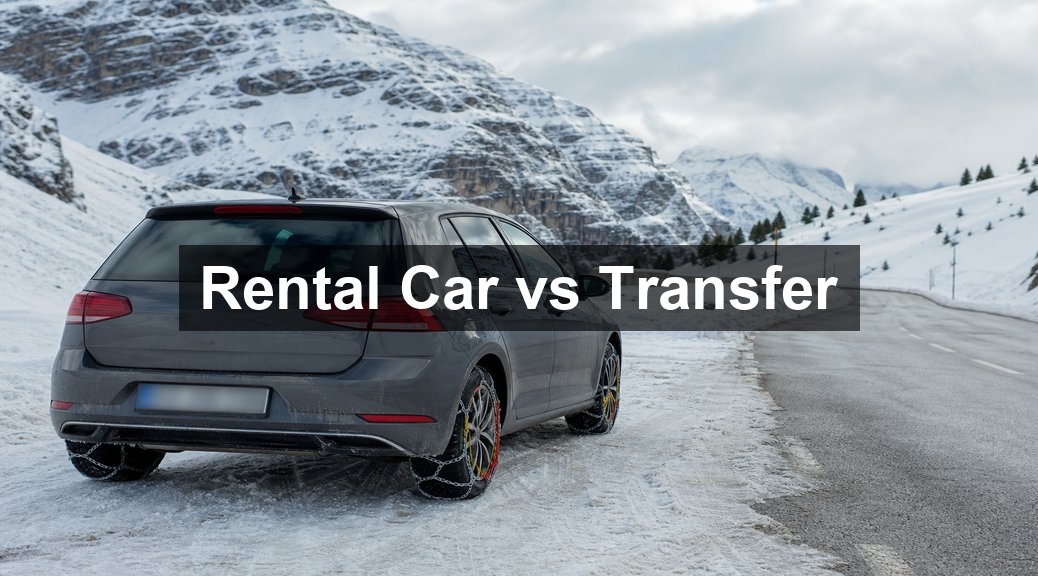
Rental Car vs Transfer for a Ski Holiday: Full Honest Comparison
Deciding how to bridge the gap between the airport and the ski resort is the most divisive part of planning a winter holiday. One camp insists that hiring a rental car is the only way to retain total freedom, picturing themselves cruising up empty mountain roads with their favourite playlist on. The other camp views driving in the snow as a miserable chore, preferring to hand their bags to a private driver and fall asleep in the back of a warm minibus.
The right choice usually depends on whether you are actually going to use the vehicle during the week, and how honestly you calculate your travel budget. A rental car looks incredibly cheap when you only look at the base rate online. But once you factor in winter tyres, snow chains, toll roads, and a week of exorbitant resort parking, the maths changes completely. For most groups, an Alps2Alps private transfer stops looking like a luxury and starts looking like the most practical way to protect your holiday time.
The Airport Arrival Experience
Landing at an airport like Geneva or Lyon triggers an immediate rush to get out of the terminal. If you booked a rental car, this is usually where your momentum dies. You join the queue at the rental desk, spend twenty minutes declining unnecessary insurance upgrades, and then drag your heavy suitcases across a freezing car park trying to find the right bay. Once you locate the car, you have to figure out how to cram four hard-shell suitcases and two sets of skis into a vehicle that suddenly looks much smaller than it did on the website.
A private transfer bypasses this friction entirely. You walk out of customs and immediately spot a driver holding a tablet with your name on it. They take your heaviest bags, walk you to a dedicated transfer parking zone just outside the doors, and load everything into a long-wheelbase minibus. You do not have to inspect the paintwork for scratches in the dark or figure out how the unfamiliar headlights work. You just get in the back, connect to the WiFi, and wait to arrive at your chalet.
Financial Realities and Hidden Costs
Trying to compare the cost of a rental car against a private transfer requires you to look far beyond the initial booking screen. The rental industry relies on aggressively low base rates, which exist primarily to lure you in before the hidden charges accumulate.
The base rate versus the final rental bill
When you look up a hire car for a week in January, the headline price might be £250. It feels like an absolute bargain for a group of four. However, that price almost never includes the practical necessities for a winter sports trip. If you are crossing borders, you often have to pay a daily premium just for the privilege of driving the car into France from Switzerland.
Then you have the insurance dilemma. Driving on snowy alpine roads dramatically increases the risk of a minor scrape or a sliding collision. The standard collision damage waiver usually comes with a massive excess, sometimes upward of £1,500. To reduce that excess to zero, the rental desk will sell you premium coverage that frequently doubles the initial cost of the rental.
You also have to add an extra driver if you want to share the physical burden of a three-hour mountain drive. Rental companies typically charge a daily fee for this. By the time you hand over your credit card and take the keys, that £250 bargain has quietly morphed into a £550 commitment, and you haven’t even paid for a drop of fuel yet.
Tolls, parking, and resort vehicle fees
The cost of driving yourself does not stop when you leave the airport compound. The main arterial routes through the French Alps, like the Autoroute Blanche towards Chamonix or the Tarentaise valley, are heavily tolled. A return trip can easily add another £40 to £50 to your total budget.
Once you reach the resort, the car becomes a severe financial liability. Ski resorts are physically small and tightly packed. Space is a premium commodity, and parking charges reflect that. Finding a free spot in Val d’Isère or Morzine during the peak season is practically impossible, meaning you are forced into an underground municipal car park.
These facilities regularly charge between £80 and £120 for a week. You are essentially paying a massive premium just to store a metal box that you will not look at again until the morning you fly home. When you add the fuel, the tolls, and the parking to the inflated rental bill, the financial argument for driving yourself starts to look remarkably thin.
The predictable cost of an Alps 2 Alps transfer
Private transfers operate on a completely different financial model. The price you see when you book is the final amount you pay. There are no surprise tolls, no mandatory insurance upgrades at the airport, and zero parking fees at the resort.
Because the cost is based on the vehicle rather than per seat, group travel makes the maths highly favourable. When an eight-seater minibus is split between two families or a group of friends, the per-head cost drops drastically. It frequently ends up being significantly cheaper than hiring two separate rental cars to carry the same number of people.
The predictability of this cost protects your holiday budget. You know exactly how much the logistics will cost months in advance, leaving you free to spend your money on lift passes, gear rental, and overpriced mountain beers. You are paying for certainty just as much as you are paying for the ride.
Winter Driving and Alpine Roads
Driving in the mountains is an acquired skill that most summer motorists simply do not possess. Navigating an unfamiliar vehicle up a winding valley road while dealing with fading light, heavy snowfall, and impatient local drivers is a genuinely stressful way to begin a holiday.
Navigating black ice and steep gradients
The road network in the Alps is incredibly well-maintained, but it is still subject to extreme weather. A road that looks clear at the bottom of the valley can quickly turn into a sheet of packed ice as you climb past the snow line. Standard driving instincts, like braking hard on a downward slope, will instantly put a car into a dangerous spin.
Local drivers understand the rhythm of these roads. They know which corners stay frozen in the shade all day and how to maintain momentum on steep inclines without spinning their wheels. Visitors in rental cars often lack this confidence, leading to erratic braking and dangerously slow crawling that causes massive tailbacks.
If you hit a sudden blizzard, the visibility can drop to a few metres. Staring through a freezing windscreen, desperately trying to follow the faint red taillights of the car in front, completely destroys the relaxing vibe of a holiday. You arrive at your chalet feeling tense, exhausted, and desperately in need of a drink.
The legal requirement for winter tyres and chains
Mountain regions do not treat winter driving equipment as optional. In the French regions of Savoie and Haute-Savoie, it is mandatory by law to have certified winter tyres or to carry snow chains from November through to April. The local police regularly set up checkpoints during heavy storms, and they will turn you around if you are not properly equipped.
Here is the catch with rental cars. If you hire a car from the Swiss side of Geneva Airport, winter tyres are usually fitted as standard. But if you hire from the French side, or from an airport further out like Lyon, the car might only have standard summer or all-season tyres. You frequently have to request and pay extra for proper winter gear.
Putting snow chains on a car is also a miserable experience. If you have never done it before, trying to decipher the instructions while kneeling in the freezing slush on the side of a busy mountain road is a nightmare. You end up with freezing, dirty hands and a lingering fear that the chains might snap off and damage the wheel arch.
Driver fatigue and navigating in the dark
Travel days are universally exhausting. By the time you wake up early, navigate the departure airport, endure the flight, and collect your bags, you have already been traveling for half the day. Asking someone to then concentrate on a highly technical, three-hour mountain drive is a heavy demand.
Most flights from the UK land in the afternoon or early evening. This means the final, most dangerous leg of the journey happens entirely in the dark. The hairpin bends are poorly lit, and the sheer drops off the side of the road can be deeply intimidating.
Alps 2 Alps transfer drivers do this specific route every single day. They know the roads intimately, they are used to the conditions, and they are fully awake. Handing the responsibility over to a professional means you can close your eyes, listen to a podcast, and actually recover from the flight before you hit the slopes.
Luggage Logistics and Equipment Space
Skiing requires massive equipment, and none of it is designed to fit neatly into the boot of a standard car. Unless you plan to rent everything at the resort, you are going to be carrying oversized bags that actively break the normal rules of transport.
Here is a realistic look at the luggage a group of four usually tries to cram into a rental car:
- Two large hard-shell suitcases that immediately consume the entire floor space of the boot.
- Two bulky boot bags that have to be wedged violently into the remaining gaps.
- A 190-centimetre double ski bag that absolutely will not fit horizontally.
- Multiple heavy winter coats and hand luggage rucksacks that end up sitting on laps.
When you hire a mid-size estate car, the only way to fit a long ski bag is to fold down one of the rear seats. This immediately ruins the passenger capacity, forcing three people to squash together on the remaining seats for a three-hour drive. You can hire a roof box, but the rental companies charge a massive premium for them, and they ruin the fuel efficiency of the car.
Private transfers eliminate this physical puzzle. When you book with Alps 2 Alps, you declare your luggage, and we assign a long-wheelbase minibus with a huge cargo area. You do not have to compromise on legroom or nurse a wet snowboard bag on your lap. Everything goes in the back, and the passenger cabin stays clean and spacious.
Resort Practicalities: What Happens When You Arrive
The main assumption behind hiring a car is that you will use it every day. You picture yourself driving to different ski lifts, popping into town for dinner, and easily transporting your gear. In almost every major alpine resort, this is a complete fantasy.
Ski towns actively discourage driving. Places like Zermatt and Avoriaz are entirely car-free by law, meaning you literally have to abandon your rental car in a valley car park miles away from your bed. Even in resorts that allow cars, like Val d’Isère or Chamonix, the local infrastructure is built around pedestrian zones and highly efficient, free shuttle buses.
If you try to drive to the ski lifts in the morning, you will spend twenty minutes scraping ice off the windscreen, another ten minutes sitting in traffic, and then you will have to pay an extortionate daily rate to park near the gondola. It is vastly easier, faster, and cheaper to just walk out of your chalet and jump on the free local bus. The reality is that your expensive rental car will sit buried under a pile of snow for six days, doing absolutely nothing to improve your holiday.
Flexibility and Grocery Runs
The most valid argument for hiring a car is the flexibility it provides on the arrival day. Ski resort supermarkets are notoriously expensive, marking up the price of basic goods because of the captive audience. Having your own vehicle allows you to stop at a massive hypermarket on the valley floor, load the boot with cheap wine, pasta, and breakfast supplies, and save a fortune on groceries.
If you are staying in a deeply isolated self-catered chalet miles away from the main resort village, a car might actually be necessary. You need a way to move your group back and forth if the local bus route does not reach your front door. For a very specific type of holiday, the rental car makes sense.
However, transfer companies have adapted to this. At Alps 2 Alps, you can easily arrange a scheduled stop at a valley supermarket during your journey. The driver pulls over, waits while you fill a trolley with supplies, and then helps you load the bags into the minibus. You get the exact same grocery savings without having to pay a week’s worth of rental fees and parking charges.
Managing Delays and Travel Chaos
The Alps are a volatile environment. Aviation schedules are fragile, and winter weather regularly throws meticulously planned itineraries into complete disarray. Your chosen transport method is only as good as its ability to handle things going wrong.
Rental desks closing after midnight
Flight delays are a harsh reality of winter travel. De-icing procedures and European air traffic control restrictions can easily push an afternoon arrival deep into the evening. If you are relying on a rental car, a severe delay can actually leave you stranded at the airport.
Most car hire desks at Geneva, Lyon, or Chambery are not open 24 hours a day. They typically close around 11:00 PM or midnight. If your flight lands at 11:30 PM and it takes you forty minutes to clear passport control and grab your ski bags, you will walk out to a dark, shuttered desk. Your car is sitting in the lot, but you have no way to get the keys until the morning.
This forces you to hastily book a terrible airport hotel and waste the first morning of your holiday going back to the terminal. You lose valuable skiing time and add an unexpected hotel bill to your trip, completely destroying the supposed convenience of managing your own transport.
Flight tracking and guaranteed waits with private drivers
A private transfer absorbs this stress effortlessly. At Alps 2 Alps, our dispatch team actively monitors live aviation data. If your plane is stuck in a holding pattern over the destination airport, your driver already knows. They adjust their schedule to match reality.
If your flight is delayed by three hours and lands at 1:00 AM, your driver will still be standing in the arrivals hall waiting for you. The vehicle will not leave, and you will not be abandoned. There is a profound psychological relief in knowing that someone is actively handling the logistics while you sit helplessly on a delayed aircraft.
This level of service guarantees that you will sleep in your own chalet bed that night, regardless of what the airlines do. You just grab your bags, find your name on the tablet, and let the driver handle the dark mountain roads while you finally relax.
Extreme weather road closures and local knowledge
Heavy snowfall is exactly what you want for the slopes, but it routinely wrecks the local road network. When a severe storm hits the Tarentaise valley, the police enforce chain-control points, and major access roads frequently back up for miles.
If you are in a rental car, you are completely blind. You do not know which alternative routes are safe, which mountain passes are closed due to avalanche risk, or how to navigate the deteriorating conditions. You often end up stuck in a freezing traffic jam for hours, desperately hoping your fuel lasts.
Our drivers live and work in these mountains. They understand the local valley shortcuts and communicate constantly with our dispatch office to avoid the worst congestion. Their vehicles are heavily winterised, allowing them to push safely through conditions that leave amateur drivers spinning their summer tyres helplessly on the side of the road.
Total Cost and Convenience Comparison
Trying to weigh up the two options requires an honest look at the total door-to-door journey. A rental car looks cheap until you start adding up the extras, the excess reduction, and the parking.
To give you a clearer picture, here is a realistic breakdown for a family of four travelling from Geneva Airport to a high-altitude resort like Courchevel for a week.
| Expense Category | Self-Drive Rental Car | Alps 2 Alps Private Transfer |
|---|---|---|
| Base Vehicle Cost | £350 (Estate car) | £380 (Return journey total) |
| Winter Tyres / Chains | £40 (If not included) | £0 (Standard on our fleet) |
| Tolls and Fuel | £70 | £0 (Included in quote) |
| Resort Parking (7 Days) | £90 | £0 (Vehicle returns to base) |
| Total Estimated Cost | £550 | £380 |
For a group heading to a resort where they will not need a vehicle daily, the private transfer is objectively cheaper. It saves you nearly £170, removes the physical strain of dragging luggage across a freezing car park, and completely eliminates the stress of driving on black ice.
The Environmental Impact of Your Choice
We cannot ignore the environmental footprint of ski holidays. The mountains are incredibly fragile, and transport accounts for the largest chunk of the carbon emissions generated by the winter sports industry. Thousands of half-empty rental cars driving up the exact same mountain passes every Saturday causes severe local air pollution in the valleys.
From a purely statistical standpoint, grouping multiple people into a single vehicle is vastly superior. A fully loaded eight-seater minibus moving two families up to the resort is significantly more efficient than those two families hiring separate rental estate cars.
At Alps2Alps, we are acutely aware of our impact on the alpine ecosystem. We continuously update our fleet to ensure we are running modern, highly fuel-efficient engines that minimise emissions. If you want the convenience of the road but want to lessen the environmental sting, booking a transfer keeps fewer combustion engines on the mountain and helps preserve the glaciers you are travelling to ski on.
Frequently Asked Questions
Do rental cars in Geneva come with winter tyres?
It depends entirely on which side of the airport you hire the car from. If you book from the Swiss sector, cars generally come with winter tyres fitted as standard. If you hire from the French sector, they often come with standard summer or all-season tyres, and you will have to request and pay a premium for proper winter tyres or snow chains.
Can I stop for groceries during an Alps 2 Alps transfer?
Yes, you absolutely can. We understand that stocking up on supplies in the valley is much cheaper than buying groceries at the resort. You can easily request a brief scheduled stop at a local supermarket when you make your booking, allowing you to grab what you need before heading up the mountain.
Is it cheaper to hire a car for a family of four?
Usually, no. Once you add the cost of fuel, toll roads, mandatory snow chains, and a week of paid parking at the ski resort, a rental car is almost always more expensive than a private transfer for a family of four. A private transfer provides a fixed, predictable cost without any hidden local fees.
Where do I park a rental car in a car-free resort?
If you are travelling to a car-free resort like Zermatt, Avoriaz, or Saas-Fee, you cannot drive to your accommodation. You must leave your rental vehicle in a designated valley parking terminal or a massive multi-storey car park on the edge of the town. You will have to pay a daily rate to park there for the entire week, and then take a train or a horse-drawn sleigh the rest of the way.


