
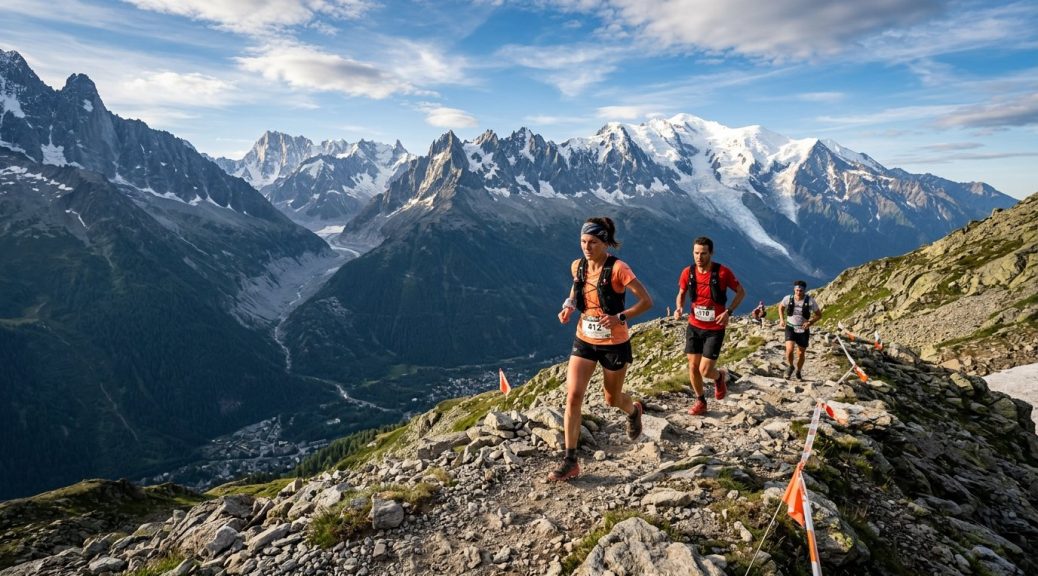
Chamonix Marathon du Mont Blanc 2026: Race History, Entry, Course Profile & Travel Guide
TL;DR
The Marathon du Mont-Blanc executes from June 25 to 28, 2026. The event enforces a strict pre-registration lottery opening in October 2025. The 42km flagship demands navigating 2,540m+ of elevation. Participation mandates the digital Health Prevention Course (PPS) and a valid UTMB Index. Operating out of Chamonix requires localized accommodation securing and private vehicular transfer logistics directly from Geneva Airport (GVA).
Marathon du Mont Blanc: Core 2026 Overview & History
The Marathon du Mont Blanc operates as the premier early-summer alpine trail event in Chamonix. Spanning June 25 to 28, 2026, it forces athletes into severe high-altitude exertion and demands strict adherence to European registration protocols.
The Legacy from 1979 to 2026
The event initiated operations in 1979 as the Cross du Mont Blanc. Established by the Club Alpin Français de Chamonix, this original 23-kilometer format was engineered specifically to test the cardiovascular capacities of localized mountain runners and alpinists navigating the lower flanks of the massif.
In 2003, race administration executed a permanent structural expansion. The 42-kilometer distance was integrated into the operational schedule to coincide strictly with the 25th anniversary of the event. This specific inclusion transformed the isolated local race into an international trail marathon benchmark, drawing elite global competitors to the French Alps.
Current operational scale dictates total valley saturation. The modern event processes 10,000 registered runners distributed across 8 distinct race formats. The integration of extreme endurance variants like the 90km, hyper-specialized vertical sprints like the Kilomètre Vertical (KV), and nocturnal team formats like the Duo Étoilé generates peak infrastructural density throughout the Chamonix basin.
The 2026 Operational Schedule
The execution window maps precisely from June 25 to 28, 2026. Positioning the event during this specific temporal band guarantees maximum daylight hours for ultra-distance competitors. Simultaneously, it exposes the entire racing field to severe alpine conditions, as late June consistently features residual high-altitude winter snowpack blocking standard trail arteries.
Operational starts are strictly staggered across the four-day block to mitigate trail gridlock. The 90km ultra initiates the primary racing phase, launching before dawn on Friday. The 23km and 10km short-course formats execute on Saturday. The 42km flagship event anchors the entire weekend, deploying its mass start on Sunday morning.
The Trail Camp expo footprint dictates central basecamp logistics. Located permanently at the Place du Mont-Blanc in the Chamonix pedestrian core, this designated zone functions as the mandatory bib collection node. It operates as the central organizational hub where all athletes must undergo initial equipment verification prior to accessing the starting corrals.
Registration Architecture and Lottery Mechanics
Securing a bib demands aggressive forward planning. Demand drastically exceeds available starting slots, forcing the Club des Sports de Chamonix to enforce a strict digital lottery system governed entirely by uncompromising temporal windows.
The October 2025 Lottery Window
Pre-registration initiates via a heavily restricted digital window in late October 2025 (projected October 20-30). Athletes must submit their preliminary data within this exact temporal bracket. Failure to execute registration during these designated days guarantees absolute lockout from the 2026 starting grid.
Race administration enforces a strict single-entry rule. Runners possess authorization to apply for only one lottery-controlled distance (42km, 90km, 23km, or Duo Étoilé). Attempting to game the probability matrix by submitting multiple or duplicate entries triggers an immediate, automated system cancellation of all associated profiles.
Final confirmation deadlines are absolute. Athletes selected via the digital draw must finalize their entry and execute payment by early November 2025. Missing this specific financial deadline forfeits the assigned slot immediately. The organization issues zero grace periods, immediately rolling unconfirmed bibs to the waitlist pool.
UTMB Index and Elite Parameters
Entry authorization relies directly on the UTMB Performance Index. To validate an application in the system, athletes must possess a verified minimum index corresponding to the target distance. Attempting to register without the requisite mathematical baseline results in an automatic administrative block.
| Race format | Minimum required UTMB Index |
|---|---|
| 90km Ultra | 450 |
| 42km Marathon | 350 |
| 23km Cross | 270 |
Elite direct-entry protocols bypass the standard lottery matrix entirely. Athletes possessing a high-tier UTMB Index—specifically above 800 for men or 675 for women—gain automatic entry rights. Executing this bypass requires the elite athlete to initiate direct email contact with race administration prior to the public lottery closure.
An eco-registration bypass exists for short-course variants. The organization reserves exactly 40% of the total bib allocation for the 10km and KV formats specifically for athletes committing to public transit. Securing these slots requires submitting valid train or international bus tickets to Chamonix, permanently blocking the athlete from utilizing private parking infrastructure.
The 42km Flagship Course Profile
The 42km format defines the competitive weekend. It imposes severe continuous gradients, requiring advanced climbing efficiency and dictating massive neuromuscular durability during the terminal alpine descents.
Elevation Metrics and Terrain
The vertical load is severe and highly compressed. The 42-kilometer route dictates exactly 2,540 meters of positive elevation gain. Because the route executes a complete loop returning to the valley floor, athletes must absorb an equal 2,540 meters of negative vertical drop.
The ascent sequence isolates specific physiological systems. The route tracks out of the Chamonix center through Argentière before climbing aggressively into the Aiguilles Rouges Nature Reserve. Navigating this sector demands precise footwork, forcing athletes over root-dense singletrack and heavily eroded alpine steps while operating at maximum heart rate.
Late-June snowpack dictates technical execution. High-altitude sectors approaching the 2,200-meter contour line frequently retain deep, localized winter snow. Navigating these sections enforces specialized technical crossing protocols, severely degrading traction and significantly reducing the average kilometer pacing for the entire field.
The Chamonix Finish Line Transition
The modern course architecture features a critical routing shift. The organization permanently abandoned the historical high-altitude finish line situated at Planpraz (2,000m). The updated 42km route now loops entirely back down the mountain, terminating directly in the Chamonix valley floor.
Terminal descent mechanics systematically dismantle the lower body. Runners must execute a punishing, uninterrupted final drop from the Flégère ski station directly into the valley. This specific sector loads maximally fatigued quadriceps with extreme eccentric force, frequently inducing acute cramping in the final three kilometers.
The final approach dictates intense spatial management. The Place du Triangle de l'Amitié serves as the terminal funnel for the marathon. This zone compresses thousands of spectators against the finishing barriers, demanding strict spatial awareness and localized crowd navigation from heavily exhausted, tunnel-visioned finishers.
The 90km Ultra and Ancillary Distances
Expanding beyond the marathon, the event deploys specialized distance categories engineered to test extreme endurance limits and high-intensity vertical outputs.
The 90km Alpine Crucible
The 90km ultra format forces athletes to absorb 6,330 meters of positive elevation gain. Operations execute under a strict 24-hour cutoff limit. The race launches precisely at 04:00 on Friday morning, dictating a mandatory nocturnal start and forcing immediate reliance on headlamp navigation through the initial valley ascents.
The track traverses the highest exposed sectors of the Chamonix valley, specifically navigating the rugged perimeter of the Aiguilles Rouges massif. This geographical routing leaves runners highly susceptible to violent microclimates. Rapidly freezing alpine storms and severe wind chill frequently induce rapid core temperature drops, elevating the risk of hypothermia for athletes operating at diminished metabolic rates.
Race direction maintains a permanent bad weather fallback route. In the event of extreme meteorological threats or unstable high-altitude snowpack, the organization unilaterally activates an alternative 78-kilometer track featuring 5,000 meters of elevation gain. This contingency bypasses the most dangerous high mountain passes, securing baseline runner safety without canceling the event entirely.
Short Course and Vertical Formats
The 23km Cross du Mont Blanc functions as a hyper-fast, anaerobic threshold race. Featuring 1,680 meters of vertical gain, the route demands sustained, high-intensity climbing capability. Unlike the marathon, the 23km variant terminates at altitude, crossing the finish line at the Planpraz ski station (2,000m) rather than returning to the valley floor.
The Kilomètre Vertical (KV) operates as a pure physical maximum output test. It is a 3.8-kilometer sprint executing exactly 1,000 meters of vertical gain directly up the Brévent massif. The terminal sector features an aerial via ferrata structure equipped with cables, iron steps, and metal handholds, requiring mandatory hand-over-hand climbing to breach the final timing mat.
The Duo Étoilé dictates specialized tactical execution. It is a 21-kilometer night race run strictly in pairs, generating a 1,450-meter elevation profile. Both team members must remain within a fixed physical proximity throughout the entire route. Scheduling this variant during the evening hours deliberately staggers the valley infrastructure density, pulling competitors out of the Chamonix center during peak dining and transit windows.
Mandatory Medical and Equipment Regulations
Operating in the Mont Blanc massif dictates total compliance with strict survival gear lists and French bureaucratic medical mandates.
The PPS Digital Medical Certificate
French trail running events have permanently eliminated the traditional doctor-signed physical medical certificate. Athletes are no longer required or permitted to submit scanned PDF forms bearing a physician's signature and stamp to validate their cardiovascular fitness for competition.
The Health Prevention Course (PPS) serves as the strict legal replacement. Athletes must execute this interactive digital risk-awareness protocol exactly three months prior to race day. The system enforces strict temporal validity; completing the PPS module outside of this precise 90-day window renders the certification void.
Failure to execute the administrative protocol yields an absolute penalty. The athlete must generate the unique PPS alphanumeric code and link it directly to their Njuko digital registration profile. Missing the organizational deadline results in immediate, unappealable bib denial. Race administration issues zero refunds for administrative negligence.
Mandatory Survival Gear Lists
The organization enforces a strict semi-autonomous requirement across all distances. Runners must physically carry defined minimum hydration volumes—typically locked at 1 liter capacity—and a baseline caloric reserve. Aid stations are widely spaced; athletes must sustain their own biological function and hydration between these remote infrastructural nodes.
The 90km format mandates a comprehensive extreme weather kit. Standard trail running apparel is insufficient for survival during immobilization at 2,500 meters.
Mandatory 90km Survival Kit Requirements:
- Waterproof Shell: Minimum 10,000 Schmerber hydrostatic rating with fully taped seams and integrated hood.
- Thermal Layers: Long-sleeved secondary thermal mid-layer (minimum weight limits apply).
- Lower Body Protection: Full-length running tights or waterproof over-trousers.
- Survival Gear: Reflective emergency space blanket (minimum 1.40m x 2m) and high-decibel whistle.
Race officials execute a zero-tolerance gear check protocol. Unannounced audits occur randomly at high-altitude cols and localized checkpoints. Athletes are detained and forced to present specific mandatory items. Missing a single mandated item guarantees a severe time penalty applied to the final result or immediate, unappealable disqualification.
Chamonix Valley Logistics and Accommodation
Absorbing 10,000 runners and their associated support crews strains Chamonix infrastructure to its absolute breaking point. Geographical staging is a critical performance factor.
Securing the Basecamp
The booking timeline dictates immediate execution. Optimal chalets and centralized apartments within the Chamonix center exhaust their inventory immediately following the October lottery confirmation. Athletes waiting for spring to secure lodging are systematically locked out of the primary operational zone.
Central staging provides a measurable biological advantage. Booking properties in direct proximity to the Place du Mont-Blanc allows zero-friction pedestrian access to the start line, the Trail Camp, and mandatory race briefings. This entirely eliminates vehicular reliance and prevents the athlete from accumulating unnecessary pre-race travel fatigue.
Lower valley isolation degrades pre-race energy. Staging in distant peripheral villages like Servoz, Passy, or Sallanches forces athletes to rely on daily highway commuting via the congested N205 route. Navigating gridlocked alpine roads to attend pre-race obligations systematically drains critical physical and mental energy reserves before the gun fires.
Internal Valley Transit
The municipal lockdown reconfigures valley mobility. Chamonix central closes entirely to private traffic during race week to absorb the pedestrian density. Standard municipal parking zones are eliminated or repurposed, demanding total reliance on pedestrian grids and public transport networks for all localized movement.
The Carte d'Hôte acts as the primary transit utility. This localized guest card—provided by official accommodation hosts—grants free access to the Mont Blanc Express train grid and the Chamonix municipal bus fleet. Support crews must exploit this network to intercept runners at accessible checkpoints like Argentière or Vallorcine without violating vehicle bans.
Official runner shuttles (navettes) supersede standard transit for race operations. The organization deploys dedicated high-capacity bus fleets specifically to transport early start waves to localized starting zones. Furthermore, mandatory gondola descents and organizational shuttles execute the mass return of runners finishing the 23km format at the isolated Planpraz high-altitude station.
Ecological Mandates and Course Tracking
Race direction enforces strict environmental compliance. Runners face immediate elimination for ecological violations within the protected alpine reserves.
Environmental Penalties
A strict ban on single-use plastics dictates resupply mechanics. Athletes must deploy personal, reusable cups at all organizational feed stations. Disposable cups are explicitly banned and will not be provided by the organization at any point on the course.
The littering protocol operates on a zero-tolerance framework. Intent is irrelevant; deliberately or accidentally dropping gel wrappers, broken equipment, or general trash on the trail results in instant disqualification.
Trail boundary rules prevent geological erosion. Cutting switchbacks causes severe environmental degradation within the protected Aiguilles Rouges Nature Reserve. Organizational marshals are stationed at critical descents and will heavily penalize or disqualify any athlete deviating from the official taped line to save distance.
Ecological Enforcement Matrix
| Violation | Consequence |
|---|---|
| Missing reusable cup | Denial of liquid resupply at aid stations |
| Littering (accidental or intentional) | Immediate disqualification and removal of bib |
| Cutting switchbacks / off-trail running | Time penalty or immediate disqualification |
Spectator Interception and Tracking
Mandatory deployment of the LiveTrail application dictates crew logistics. Support crews must utilize this official digital tracking system to monitor athlete splits and calculate accurate arrival times at specific mountain checkpoints. Relying on generalized pace estimates guarantees missed interceptions.
Optimal viewing zones require lift access. Crews utilizing the Flégère and Vallorcine telecabines can intercept athletes at critical high-altitude nodes without violating the strict closed-road vehicular mandates enforced by local authorities.
Crew assistance rules govern all physical interactions. External pacing by non-registered runners or providing physical aid outside the strictly enforced 30-meter designated feed station perimeters is universally banned. Violations observed by marshals result directly in time penalties applied to the runner.
Airport Transfers: Getting to Chamonix
Ground transport from international aviation hubs dictates final operational readiness. Navigating oversized trail gear through fragmented rail networks degrades biological output prior to the race.
The Geneva (GVA) Intake Corridor
Geneva Airport (GVA) functions as the mandatory aviation hub for the Mont Blanc massif. It is positioned exactly 100 kilometers from the Chamonix valley floor, providing the most direct geographical intake vector.
Standard transit math defines the timeline. Baseline vehicular transit tracking via the A40 autoroute requires 75 to 90 minutes. This calculation assumes optimal summer weather and baseline traffic conditions.
Peak weekend congestion invalidates baseline timelines. The convergence of the Marathon du Mont Blanc weekend influx and standard late-June European tourism creates severe systemic bottlenecks on the N205 approach. Executing airport transfers requires factoring in a calculated transit buffer to absorb multi-hour delays.
Private Transfer Execution
Private transfers constitute a biological necessity. Pre-booking a dedicated vehicle guarantees immediate terminal departure upon arrival. This execution isolates the athlete, bypassing transit hub dwell times and preserving critical pre-race horizontal recovery time.
Payload advantages dictate vehicle selection. Verified alpine operators possess the cubic capacity to effortlessly handle oversized 90km drop bags and rigid carbon trekking poles. Regional public buses routinely reject these oversized loads at boarding due to restricted undercarriage dimensions.
Execute the logistics link parallel to registration. Book a Geneva to Chamonix transfer immediately upon lottery confirmation. This is the sole mechanism to secure heavy-lift vehicle capacity before the peak summer supply exhausts.
Frequently Asked Questions (FAQ)
What are the Marathon du Mont Blanc 2026 dates?
The four-day operational block executes from June 25 to 28, 2026, anchoring the early summer Chamonix trail calendar.
When does registration open for the 2026 Mont Blanc Marathon?
Pre-registration for the lottery system typically opens in late October 2025. Non-lottery short distances execute their registration phases in early November.
Do I need a medical certificate for the Mont Blanc Marathon?
No. France has permanently replaced physical medical certificates with the digital Health Prevention Course (PPS). This must be completed strictly within 3 months prior to the race date.
What is the elevation gain for the 42km Mont Blanc Marathon?
The 42km route features 2,540 meters of positive elevation gain and an equal 2,540 meters of descent, executing a full loop finishing in the Chamonix valley.
How hard is the 90km du Mont Blanc?
Exceptionally difficult. The format involves 6,330 meters of climbing over 92 kilometers and traverses the most exposed, technical high-altitude terrain in the Chamonix basin under a 24-hour limit.
What is the closest airport to Chamonix for the marathon?
Geneva Airport (GVA) functions as the closest and most efficient international hub, located exactly 100 kilometers away from the resort base.
How do I transfer from Geneva to Chamonix?
Pre-booking a direct private transfer via the A40 highway is the most biologically efficient mechanism to transport heavy race gear and bypass public transit friction.
Are trekking poles allowed in the Marathon du Mont Blanc?
Yes. Poles are highly recommended for the 42km and 90km formats. If deployed, organizational rules mandate athletes must carry them for the entire duration of the race; discarding them at aid stations is forbidden.


